All Pioneers (100)
Profile 9 of 100
1958– advanced

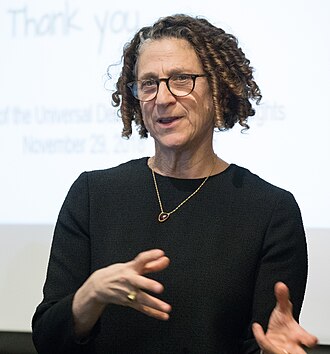
Shafi Goldwasser

Director of the Simons Institute at UC Berkeley & Turing Award Laureate
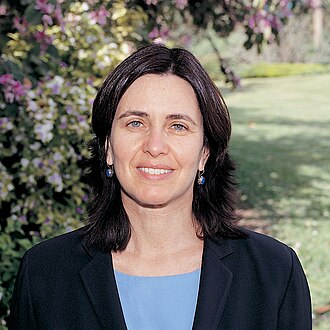
Shafi Goldwasser

Biographical Overview

Co-founded the theoretical foundation of modern cryptography. Goldwasser co-invented Zero-Knowledge Interactive Proofs (1985), formulated Probabilistic Public-Key Encryption and Semantic Security (1982), co-created Pseudorandom Functions (GGM 1986), and helped prove the PCP Theorem linking proof verification to computational hardness.

"Zero-knowledge changed how we think about knowledge and verification in computation: it is possible to demonstrate absolute truth without giving away the secret."

— Shafi Goldwasser
Lifespan 1958–
Technical Depth advanced
Key Breakthrough Zero-Knowledge Proofs (GMR 1985) & Semantic Security
Focus Areas
cryptography theoretical computing security
Topic Keywords
#cryptography #zero-knowledge #semantic-security #PCP-theorem #complexity-theory #pseudorandomness
Source: Historical Biographical Archive / Wikimedia Commons
💡

Historical Context & Impact

In short

When Goldwasser, Micali, and Rackoff first submitted their zero-knowledge proof paper to computer science conferences, it was rejected four consecutive times because reviewers found the concept of proving truth without revealing information too counterintuitive to believe. Today, zero-knowledge proofs underpin privacy blockchains and modern digital authentication.

Key Technical Breakthroughs & Inventions

01
Zero-Knowledge Interactive Proofs (GMR 1985) Proved with Silvio Micali and Charles Rackoff that a prover can convince a verifier that a statement is mathematically true without disclosing any secret details—the theoretical engine powering modern zk-SNARKs and privacy-preserving blockchain protocols.
02
Probabilistic Encryption & Semantic Security (1982) Invented the Goldwasser-Micali cryptosystem, introducing the mathematical standard of semantic security: proving that an eavesdropper with polynomial compute cannot learn any property of the underlying plaintext from observing ciphertext bits.
03
Pseudorandom Functions & The GGM Construction (1986) Proved mathematically that cryptographically secure pseudorandom function families can be built from any length-doubling pseudorandom generator, which forms the theoretical foundation for symmetric block ciphers and HMAC.
04
The PCP Theorem & Inapproximability Co-authored breakthrough results proving that interactive proof verification by sampling a constant number of random bits directly dictates the limits of approximating NP-hard optimization problems.

Selected Honors & Industry Recognition

Original Publications, Papers & Archives

Connected Contemporaries

All 100 Pioneers →