All Pioneers (100)
Profile 8 of 100
1932–2020 advanced

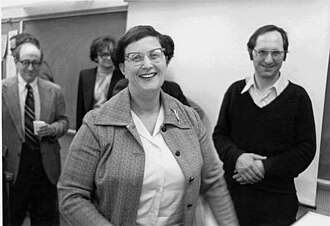
Frances E. Allen

IBM Fellow & First Female ACM A.M. Turing Award Laureate
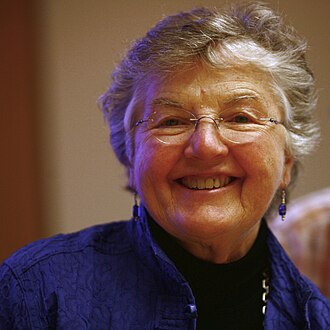
Frances E. Allen

Biographical Overview

Pioneered optimizing compilers, program flow analysis, and automatic parallelization. Allen formulated Control Flow Graphs (CFGs), interval analysis, and interprocedural data flow algorithms that transform source code into efficient machine execution, establishing the foundation for compiler engines like LLVM and GCC.

"Optimization is about understanding the program deeply enough to transform it without changing its meaning."

— Frances E. Allen
Lifespan 1932–2020
Technical Depth advanced
Key Breakthrough Control Flow Graph Analysis (1970) & Optimizing Compiler Frameworks
Focus Areas
compilers program analysis parallel computing high-performance systems
Topic Keywords
#compilers #compiler-optimization #control-flow-analysis #data-flow-analysis #parallelization #supercomputing #Turing-Award
Source: Historical Biographical Archive / Wikimedia Commons
💡

Historical Context & Impact

In short

Frances Allen invented Control Flow Graphs (CFGs), giving computers the ability to analyze and rewrite human code so it runs dramatically faster without altering its meaning. She originally joined IBM on a temporary contract to pay off student loans from her math degree before planning to return to high school teaching—and ended up staying for 45 years.
Key Technical Breakthroughs & Inventions

01
Control Flow Graphs & Interval Analysis (1970) In her seminal 1970 paper, introduced the graph-theoretic framework modeling program execution flow with basic blocks and directed edges, defining graph intervals to enable global loop optimizations that all modern compilers still rely on today.
02
Canonical Catalog of Compiler Optimizations (Allen–Cocke 1971) Co-authored "A Catalog of Optimizing Transformations", establishing the formal definitions for common subexpression elimination, loop-invariant code motion, induction variable elimination, and dead code elimination.
03
Supercomputing Compilers (Stretch-Harvest & ACS) Built optimizing compilers for the IBM 7030 Stretch and the classified NSA Harvest cryptanalysis computer, pioneering register allocation algorithms and instruction-level parallelism decades ahead of commercial standards.
04
Automatic Parallelization & PTRAN Directed the Parallel TRANslation (PTRAN) research project at IBM T.J. Watson, creating interprocedural analysis algorithms to automatically extract multi-core parallelism from sequential Fortran code.

Selected Honors & Industry Recognition

Original Publications, Papers & Archives

Connected Contemporaries

All 100 Pioneers →