All Pioneers (100)
Profile 5 of 100
1939– advanced

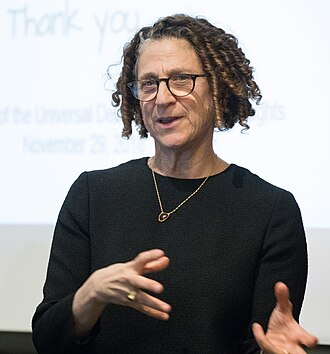
Barbara Liskov

MIT Institute Professor & ACM A.M. Turing Award Laureate
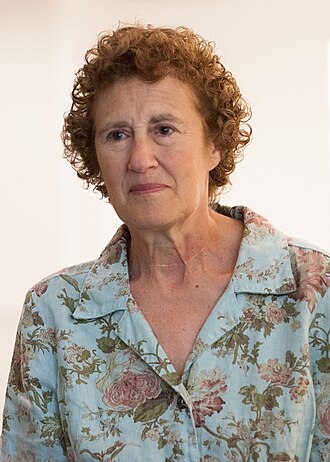
Barbara Liskov

Biographical Overview

Pioneered abstract data types, behavioral subtyping, and distributed fault-tolerant algorithms. Liskov created the CLU programming language (introducing data abstraction, iterators, and exceptions), formulated the Liskov Substitution Principle (LSP), and co-invented Practical Byzantine Fault Tolerance (PBFT).

"Modularity based on abstraction is the hallmark of a good program."

— Barbara Liskov
Lifespan 1939–
Technical Depth advanced
Key Breakthrough Liskov Substitution Principle (LSP, 1987) & Practical Byzantine Fault Tolerance (PBFT)
Focus Areas
programming languages distributed systems software engineering
Topic Keywords
#programming-languages #LSP #CLU #PBFT #distributed-systems #type-theory
Source: Historical Biographical Archive / Wikimedia Commons
💡

Historical Context & Impact

In short

Liskov invented abstract data types and behavioral subtyping because 1970s software projects regularly collapsed under unmanageable complexity. She proved that modular programs remain maintainable only when calling code depends strictly on an interface's contract rather than its internal implementation details.
Key Technical Breakthroughs & Inventions

01
Liskov Substitution Principle (LSP, 1987) Defined behavioral subtyping with Jeannette Wing: if S is a subtype of T, any program written for type T must work correctly when given an object of type S without breaking assumptions—the "L" in SOLID object-oriented design.
02
CLU Programming Language & Abstraction (1974) Designed the CLU language, which introduced linguistic encapsulation (separating data representation from public operations), language-level iterators (yield), and structured exception handling.
03
Practical Byzantine Fault Tolerance (PBFT, 1999) Co-created PBFT with Miguel Castro, showing that distributed systems could reach Byzantine consensus across asynchronous networks with low polynomial overhead O(n²), laying the foundation for modern distributed ledgers.
04
Argus & Distributed Transactions (1982) Created the Argus language, introducing "guardians" and nested atomic transactions to make client-server programs reliable across unstable network connections.

Selected Honors & Industry Recognition

Original Publications, Papers & Archives

Connected Contemporaries

All 100 Pioneers →