All Pioneers (100)
Profile 7 of 100
1935–2007 advanced

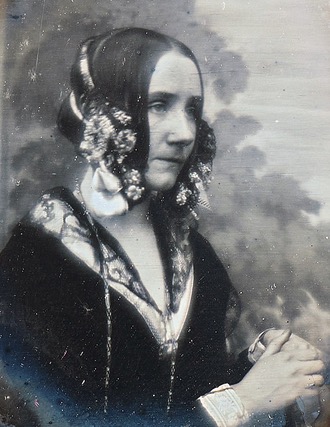
Karen Spärck Jones

Professor of Computers and Information at Cambridge & Pioneer of Statistical NLP

Karen Spärck Jones

Biographical Overview

Formulated Inverse Document Frequency (IDF, 1972) and co-developed the Robertson–Spärck Jones probabilistic retrieval model, the foundation for Okapi BM25. Spärck Jones proved that word co-occurrence and statistical rarity across a document library provide an effective basis for search engines, long before modern web indexing existed.

"Computing is too important to be left to men."

— Karen Spärck Jones
Lifespan 1935–2007
Technical Depth advanced
Key Breakthrough Inverse Document Frequency (IDF, 1972) & Robertson–Spärck Jones Model (BM25 precursor)
Focus Areas
information retrieval natural language processing search algorithms statistical semantics
Topic Keywords
#information-retrieval #IDF #TF-IDF #BM25 #natural-language-processing #statistical-semantics #search-engines
Source: Historical Biographical Archive / Wikimedia Commons
💡

Historical Context & Impact

In short

While 1970s linguists insisted that computers needed complex, handwritten grammar trees to read sentences, Spärck Jones proved that counting word rarity across a whole library was far more effective. Her radical thesis was initially dismissed as crude, but today it is the mathematical bedrock of all modern web search and AI language models.


Key Technical Breakthroughs & Inventions

01
Inverse Document Frequency (IDF, 1972) Formulated that a term's informational value in a collection of N documents is inversely proportional to how many documents contain it: IDF(t) = log(N / n_t). Combined with Term Frequency (TF), this became the foundation of modern search engines like Lucene and Elasticsearch.
02
Robertson–Spärck Jones Probabilistic Retrieval Model (1976) Co-developed the Binary Independence Model and relevance weighting formula under the Probability Ranking Principle, which directly evolved into the industry-standard Okapi BM25 ranking algorithm.
03
Statistical NLP over Handcrafted Grammars Defied the 1970s consensus of rigid syntactic rules by showing that statistical counting of words across authentic text collections outperforms hand-coded grammar trees for document retrieval.
04
Experimental Information Retrieval Benchmark Design Pioneered rigorous blind evaluation protocols for large-scale retrieval systems, establishing the experimental precision/recall frameworks used by NIST's Text REtrieval Conference (TREC).

Selected Honors & Industry Recognition

Original Publications, Papers & Archives

Connected Contemporaries

All 100 Pioneers →